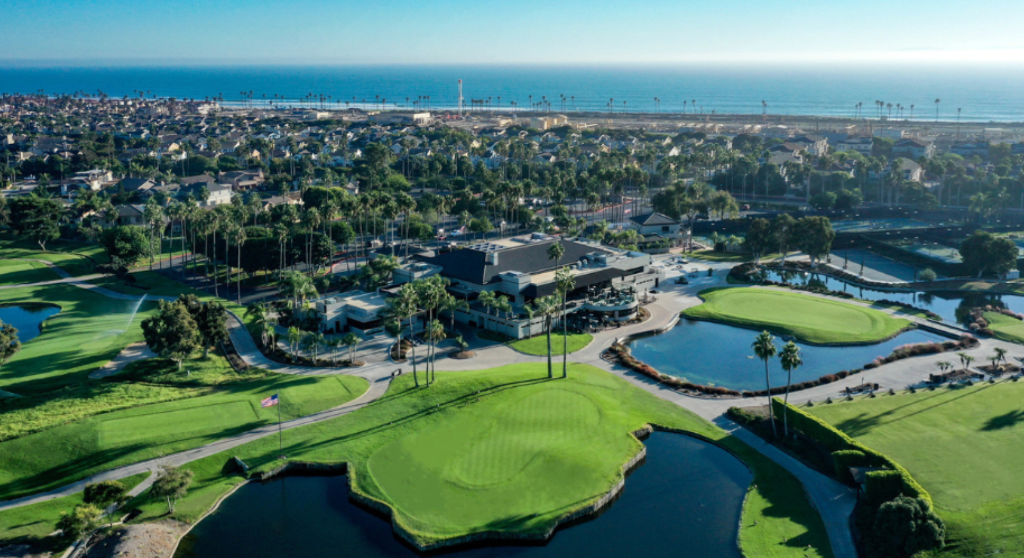
Per the organizer's own event listing, the fourth annual BLUNTS N BIRDIES landed in Huntington Beach on May 11, 2026, with a 10 a.m. shotgun start and the same premise that made it work the first three times: put the cannabis industry on a golf course for a day and let the relationships do what a trade-show booth never does. High Rise produced the official recap coverage. What follows is the day as it played, and the coverage system behind it — the part most brands get wrong when they spend real money on an activation and walk away with a folder of pretty photographs and nothing to show a partner.
Golf works for this industry for an unglamorous reason. A round is four hours of forced proximity with the same three people, and cannabis is still a business where distribution, shelf space, and co-branding get decided by who trusts whom. An event format that manufactures four uninterrupted hours of that is doing more commercial work than a panel discussion ever will.
Why the golf format keeps outperforming the booth
Most cannabis events put buyers and brands in the same room and then compete for attention inside it. Loud floor, short conversations, a badge scan that means nothing by Monday. The golf format inverts it. Groups are small, fixed, and slow. The brand showing up is not interrupting the day; it is hosting it.
That changes what the marketing has to do. At a booth, creative is fighting for a glance. At a tournament, creative is setting a tone across a whole course — tee signage, cart wraps, on-course product moments, the gift bag someone actually keeps. The work is environmental, not interruptive, and it rewards brands that plan placement before the build rather than after.
It also changes who should go. Sending a marketing coordinator to a booth is normal. Sending one to a golf tournament wastes the format. The people who close distribution deals should be the people in the carts.
What a recap has to accomplish
A recap serves four audiences at once, and most fail because they only serve the first. Attendees want a record of a day they recognize. Organizers need an asset that explains the format well enough to sell next year. Partners need to see their approved presence in the environment they paid for. And the much larger group who were not there need enough context to understand what the day was without being sold to.
For a golf event, the visual opportunity is the contrast itself — manicured course, cannabis industry, no tension between them. That contrast is the story. Coverage built only from product close-ups throws it away.
The planning standard is the same one behind every activation on the cannabis events calendar: objective, permissions, shot list, owners, destinations, and follow-up defined before anyone shows up.
Build coverage around distinct evidence, not repeated moments
Event teams capture the same attractive moment twenty times and discover in the edit that they have one usable frame. Coverage needs categories that each do a different job:
- Setting: wide views that establish the course and the scale of the day.
- Participation: people arriving, warming up, playing, talking, moving between holes.
- Brand presence: readable signage, product, apparel, sponsor builds, and activation details cleared for coverage.
- Human moments: the candid interaction that carries the social character without staging every frame.
- Sequence: an opening, an active middle, and a closing beat, so the edit lands as a day rather than a reel.
Reusing one hero image across an article and three posts does not create more evidence — it advertises that the shoot was thin. Use the hero once. Add a second visual only when it reveals a different person, moment, or detail.
Accuracy starts with file control on the day
Label media the day it is captured: event, date, location, shooter, identified people, rights status, caption notes. If a person or brand cannot be identified with confidence, do not guess in a public caption — in a licensed industry, a wrong tag is a real problem, not a typo.
Keep selects, releases, sponsor approvals, and final exports on the project record. A working content calendar should show which asset is cleared for which destination and who signs off.
Edit for the event that actually happened
The fastest way to make a good event look fake is to cut it like a bigger one. If the strongest material is community interaction, build around community. If it is competition and course movement, let the edit say that. Do not imply a packed crowd, a celebrity appearance, or a product launch the day did not contain.
Open with an establishing shot, move into action and interaction, use close detail for texture, then return wide so the viewer keeps their bearings. Music, graphics, and pace should match the event's tone — a relaxed 10 a.m. shotgun start is not a stadium production, and scoring it like one reads as insecurity.
Respect the channel in the edit, not after it. A horizontal cut preserves the setting; vertical selects carry social. Plan those crops from the source footage instead of amputating sponsor marks and faces in post.
Separate what coverage proves from what it does not
This is where most post-event reporting quietly falls apart. Recap media proves that an activation, sign, or interaction existed in the captured environment. It does not prove that every contracted deliverable shipped. Reconcile the final asset list against the sponsor agreement and the production log — the highlight edit is not the report.
Views and shares describe distribution, not business impact. Qualified meetings, retailer follow-up, partner renewals, earned coverage, and pipeline movement each need their own records. The reasoning behind that discipline is the same one in the dispensary data framework: correlation presented as causation is how marketing budgets get cut a quarter later.
Plan partner coverage before the first tee time
Partner deliverables get captured when the production team has a written matrix: sponsor name, physical location, required shot, orientation, rough timing, responsible operator, caption language, approval contact. Confirm whether logos must appear unobstructed and whether anyone using product on camera needs additional consent.
Do not promise equal screen time without looking at the course plan. A sponsor mark on a low-traffic hole in bad light is hard to document at any budget. The content plan belongs in the placement conversation before the build — not as a rescue mission after it.
When partner materials carry product claims, confirm the public caption and graphic match the approved language. Event energy is not a reason to improvise a claim or drop a material-relationship disclosure.
Give participants a real follow-up path
The value of a relationship event continues through follow-up, and generic blasts waste it. Sort contacts by relationship and promised next step — organizer, sponsor, retailer, creator, media, vendor, participant — and send the specific thing that was discussed.
Publish while the context is current, but do not trade accuracy for speed. Confirm title, date, city, identified people, partner names, media rights, links, captions, and final render, with one owner on approval.
One day of capture should feed a content system, not a single post: the full recap, distinct still selections, participant interviews, organizer notes, and reference material for next year's sponsor conversation.
The tradeoffs nobody budgets for
Tight production creates cleaner frames and can make a social event feel staged. Pure observation preserves spontaneity and misses required partner details. Schedule the shots that must happen, then leave real capacity for the unscripted material — that is where the usable footage lives.
Crew size changes the room. A four-person rig on a golf course alters the behavior it came to capture. Use the smallest crew that can meet the shot list, tell people where filming is happening, and keep consent and escalation simple.
Speed versus archive quality is the last one. Same-day selections capture attention; careful labeling and editing make the material worth something in six months. Assign one path for each so neither gets improvised at 9 p.m. in a parking lot.
What most operators miss
The lesson is not that every cannabis brand should host a golf tournament. It is that a format with a defined environment, natural movement, and real interaction produces relationship and media value that a booth cannot — but only when the business objective is set before the budget.
Decide first whether the priority is partner development, retailer relationships, community, content, or sponsorship revenue. Price the full production and follow-up, not the venue. Then confirm the format beats the alternatives — a smaller dinner, a retail program, a media partnership — for that specific objective. Plenty of brands would get more from three well-run retailer dinners than from one tournament.
And connect the coverage to somewhere. Tie it to the retail plan and to destinations the brand owns. A recap with no next step is a social asset with a two-day shelf life.
Post-event checklist
- Lock the event name, edition, date, city, and organizer detail before publishing.
- Identify people, products, and partner marks only where you are certain.
- Clear media rights, releases, music, captions, links, and export versions.
- Use each image once unless a repeat has a distinct editorial job.
- Keep visible event evidence separate from attendance, sales, and pipeline claims.
- Ship promised partner assets and assign every follow-up by name.
- Record corrections and the date the piece was last checked.
The operating takeaway
BLUNTS N BIRDIES works because the format does the commercial labor — four hours, small groups, no competing floor noise. The coverage works when it captures the day honestly, documents what partners paid for, and hands every relationship a specific next step. High Rise has produced 250+ events since 2012, and the pattern holds across all of them: the activation is rarely the weak link. The follow-up system is.
Talk to High Rise about building the capture and distribution system behind your next activation.