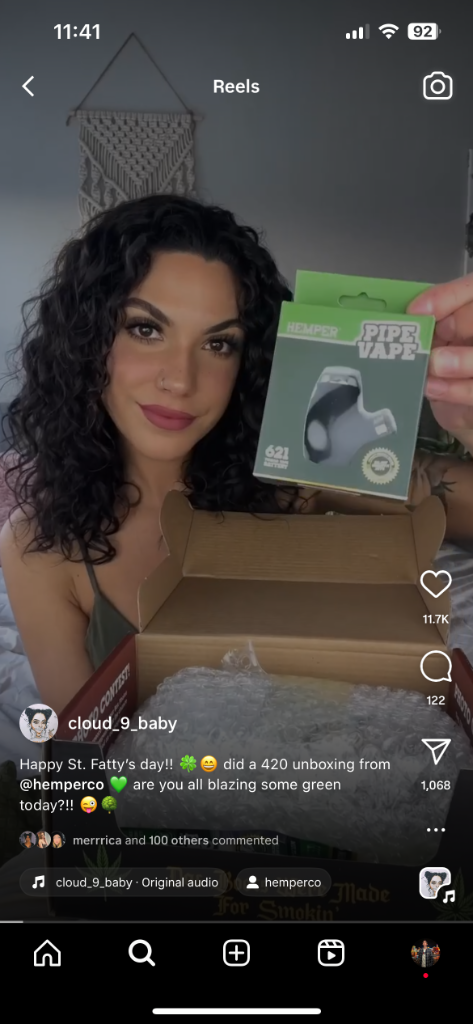
Cannabis social media marketing in 2026 is less about chasing viral reach and more about building durable brand demand inside restricted, unstable platforms. Brands can reduce platform dependence when they publish consistently, support real community, preserve approved assets, and connect social activity to retail, retention, and repeat recognition. Social still matters because it is one of the few places a cannabis brand can show taste, explain context, and stay culturally visible at scale, but it only works when the strategy respects both platform sensitivity and operational discipline.
That means social should not be treated like a digital poster wall. It has to function as a trust engine. Your channels need to make the brand feel active, credible, and worth following even when direct conversion is not always immediate. At High Rise, we treat cannabis social media as a system that connects brand identity, creator output, community management, product storytelling, and measurement.
Why Social Still Matters On Restricted Platforms
Cannabis operators work inside a tougher environment than many mainstream brands. Platform enforcement can be inconsistent, paid options are limited or constrained, and teams often feel like one wrong post can interrupt momentum. That tension causes many brands to either overplay it safe until the content becomes forgettable or push too hard for attention without a reliable risk framework. Neither approach is sustainable. The better move is to accept the constraint, then build a program that emphasizes relevance, consistency, and brand recall over short-term gimmicks.
Restricted platforms raise the stakes because social is often the first place a potential customer, retail partner, or future collaborator encounters the brand. If the account looks inactive, generic, or scattered, trust erodes quickly. If it looks cohesive, current, and audience-aware, the brand feels alive even before a person tries the product. That is why a serious social strategy should be treated as a core operating function, not a side task assigned after everything else is done.
Start With Audience And Community, Not Content Volume
Many cannabis brands post too much of the wrong thing because they begin with an output target instead of an audience model. A better question is: who are we actually trying to become useful or interesting to? Some brands need cultural relevance with core enthusiasts. Some need neighborhood trust with local buyers. Some need trade visibility with retailers, collaborators, or founders in adjacent categories. The answer changes the tone, cadence, visual language, and level of explanation your content requires.
Community strategy matters because community-focused cannabis accounts do not need to feel like one-way broadcasting machines. They feel like living brands with a point of view. That includes thoughtful replies, clear story sequencing, recurring formats followers can recognize, and a visible understanding of what the audience actually cares about. Social teams that listen well can spot which questions keep repeating, which products create confusion, which aesthetic cues are landing, and which community segments are becoming more important over time. That intelligence should shape content planning, not just comment moderation.
Build Content Pillars That Can Repeat Without Getting Stale
A cannabis brand usually becomes easier to grow when it stops inventing every post from scratch and starts running on repeatable pillars. Content pillars are not creative cages. They are operating structures that keep the brand recognizable while still allowing variation. In practice, a balanced program may rotate through a mix of education, culture, product context, people, and social proof. The exact weighting depends on the brand, but the principle stays the same: recurring themes make planning easier and audience expectations clearer.
Education Creates Trust
Education content helps explain formats, rituals, product differences, terminology, or usage context without turning the feed into a lecture hall. When done well, it lowers confusion and gives followers a reason to save, share, or revisit a post. Educational content is especially useful for brands trying to feel credible instead of purely aesthetic.
Culture Creates Relevance
Culture content gives the brand texture. It shows taste, perspective, world-building, and the kind of social energy the brand wants to be associated with. This is where strong visuals, references, humor, or scene fluency help the account feel native rather than corporate. Effective culture posts should reflect genuine subject knowledge and audience context, not like they are trying too hard to borrow it.
Product Context Creates Conversion Readiness
Product content should not be a constant parade of isolated pack shots. It works better when anchored in use occasions, sensory cues, line architecture, or visual systems supported by good design. Social is often where a product gets framed before a shopper sees it in-store, so context matters more than repetition. Show what the item is for, how it fits into the brand, and why it belongs in the audience’s mental shortlist.
Give Each Channel A Clear Job
One of the easiest ways to waste effort is to duplicate the same content across every channel without thinking about role. Different platforms reward different behaviors, and cannabis brands benefit when they assign each channel a job instead of asking every account to do everything. Instagram may carry the visual identity and brand world. Short-form video channels may be better for personality, process, or quick education. Professional or founder-facing channels may support B2B authority, partner credibility, or category commentary.
Channel roles also help teams decide what to prioritize when time or assets are limited. Instead of publishing six mediocre versions of the same idea, adapt the clearest concept for the environment where it fits best. It also helps your team know what success means on each platform. Awareness, saves, comments, profile actions, inbound partner interest, and site traffic do not all have to come from the same place.
Creator And UGC Programs Need Structure, Not Random Reach
Creator partnerships and user-generated content can be powerful in cannabis, but only when the brand thinks beyond one-off exposure. Too many programs chase large followings without checking audience fit, content quality, or whether the creator actually makes the brand more understandable. The better model is to work with people whose style, credibility, and community align with the brand’s world. A smaller, more trusted creator can be more valuable than a bigger account that produces generic lifestyle noise.
UGC considerations matter too. Not all community content should be reposted just because it exists. Brands need clear criteria for what fits the visual standard, what strengthens the message, and what creates useful social proof without muddying the identity. Strong programs often run with a cohort model: a repeat group of creators, customers, or collaborators who generate recognizable, on-brand material over time.
Build A Real Production System Behind The Feed
The difference between reactive posting and strong brand presence is operational design. Serious teams do not rely on last-minute inspiration alone. They maintain a functioning content creation pipeline, a clear review process, organized asset libraries, caption workflows, publishing calendars, and a feedback loop between what gets produced and what performs. Without that structure, even talented creative teams burn time remaking the same decisions every week.
Production systems also protect quality during busy periods. When launches stack up or team bandwidth changes, a good system keeps the brand from slipping into inconsistent tone, rushed visuals, or repetitive copy. It gives the operator a way to plan ahead while still leaving room for timely moments. The point is to make consistency possible.

Measure The Signals That Actually Matter
Cannabis operators often get trapped between vanity metrics and under-measurement. Follower counts alone do not tell you whether the brand is becoming more persuasive, and raw impressions rarely explain whether the content is building durable preference. Smarter measurement looks at patterns: which formats create meaningful comments, which posts drive saves, which story sequences lead to profile actions, which creators produce stronger quality engagement, and which content themes correlate with traffic, retail lift, or menu curiosity.
Measurement should also guide strategic pruning. If a content type looks polished but generates no response, it may not deserve the same production energy. If a recurring format builds strong interaction, it may need more versions, not just praise in a recap deck. The goal is to connect social signals to business learning. Reporting is more useful when it informs a decision rather than functioning only as a scoreboard. Strong strategy depends on what you are willing to stop doing as much as what you scale.
Compliance-conscious Guidance Without Inventing Rules
Cannabis social media requires caution, but good caution is not guesswork. Operators should create internal standards for claims, visuals, language, review, and escalation so teams can work confidently without improvising risk decisions post by post. Because platform behavior can change and enforcement is not always transparent, a defensible approach is to design content that is clear, accurate, and brand-forward without leaning on unsupported promises or bait tactics. That protects the account while keeping the message strong.
This is also where tradeoffs appear. If you strip every post of personality to avoid any potential issue, the brand may become invisible. If you push edgy execution without process, the account may become unstable. The right middle path is disciplined creativity backed by an operator mindset that reviews claims, organizes approvals, and learns from performance.
Examples, Tradeoffs, and Operator Lessons
A product-heavy feed may create strong visual consistency but fail to show enough human energy to build community. A culture-first feed may feel exciting but under-explain the offer. A creator-heavy program may generate variety but weaken brand cohesion if the roster is too loose. None of these approaches is automatically wrong, but each has a tradeoff that should be chosen deliberately. We often see the best results when brands balance a recognizable visual world, dependable content pillars, and enough flexibility for creators or community moments to keep the feed from feeling manufactured. Many of the strongest patterns we see in case studies come from brands that stop trying to win every platform in the same way and instead build a system that suits their audience, team capacity, and retail reality.